Biography
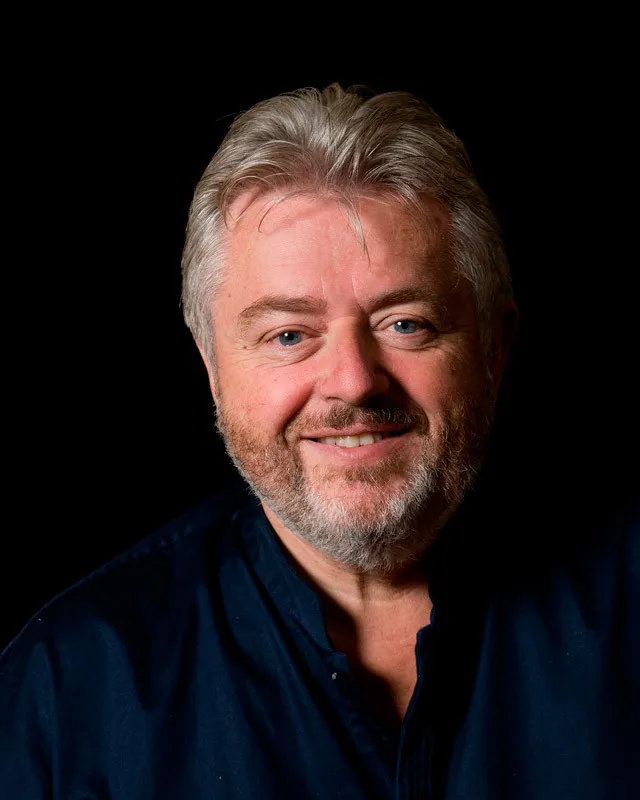
Bill Whelan (born May 22, 1950) is the Irish composer who composed Riverdance, a piece for the interval of the Eurovision Song Contest. It was a ten-minute display of traditional Irish dancing that eventually became a full-length stage production and spawned a worldwide craze for Irish dancing and Celtic music.
Whelan is a native of Limerick, and was educated at Crescent College, University College Dublin and the King's Inns. He worked as a pianist for The Waterboys during their Fisherman's Blues sessions. His work appears on a second album from those sessions, Too Close to Heaven.
Read full biography ↓
Bill Whelan has worked as a composer and producer in Dublin since 1970's. His credits include U2, Paul Brady, Kate Bush, Hothouse Flowers, Van Morrisson, East Wind, Planxty (which he was a member for two years), and many other Irish and International artists.
As a composer, he has worked extensively in theatre -- at the Abbey Theatre, Dublin for fifteen years of the W.B. Yeats International Festival.
Original music (1989–1993) for fifteen W.B. Yeats plays (three per season), which were produced by James W. Flannery for the Yeats International Theatre Festival held at Dublin's Abbey Theatre each September during that period.
The Seville Suite (1992), which was inspired by the exploits of Aodh Rua Ó Dónaill from The Battle of Kinsale in 1601 until his arrival in Galicia to the welcome of The Spanish Earl of Caraçena. In addition to the orchestra, The Seville Suite includes Celtic Music on Uilleann Pipes, accordion, bodhrán, fiddle as well as Galician harp, whistles and pipes.
The Spirit of Mayo (1993) in honour of Mayo 5000. Performed by an 85-piece orchestra in Dublin's National Concert Hall and featuring a powerful Celtic drum corps and a 200 strong choir and choral group Anúna.
The Connemara Suite (2009), features the Irish Chamber Orchestra along with soloists Zoë Conway, Morgan Crowley, Colin Dunne (Dance Percussion) and Fionnuala Hunt.
Whelan achieved international recognition in 1994 when he composed Riverdance for the interval segment of the Eurovision Song Contest, a work that developed into the stage show of the same name. He received the Grammy Award for Best Musical Show Album for Riverdance in 1997 and was granted the Freedom of the City of Limerick in 2001.
His later honours included an IMRO Lifetime Achievement Award in 2001, a Meteor Music Awards Lifetime Achievement Award in 2006, election to Aosdána in 2016, an honorary fellowship of RCSI in 2022, and publication of his autobiography The Road To Riverdance in the same year.
Biography text from Last.fm, available under CC BY-SA.