Bonnie Raitt
Biography
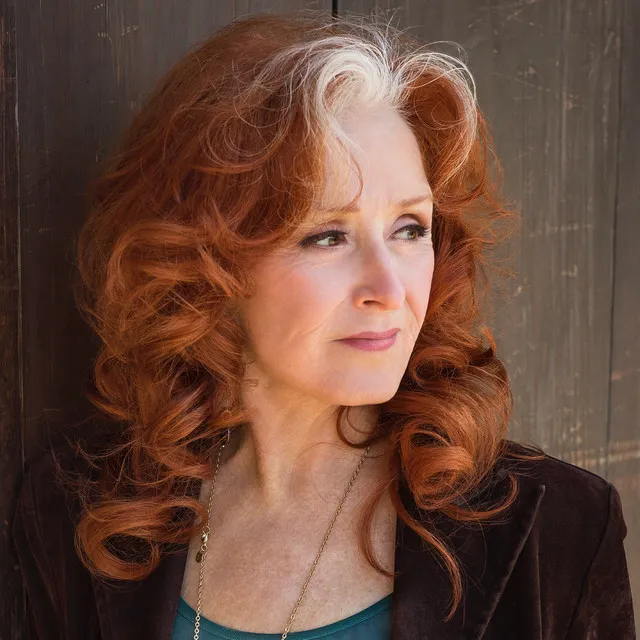
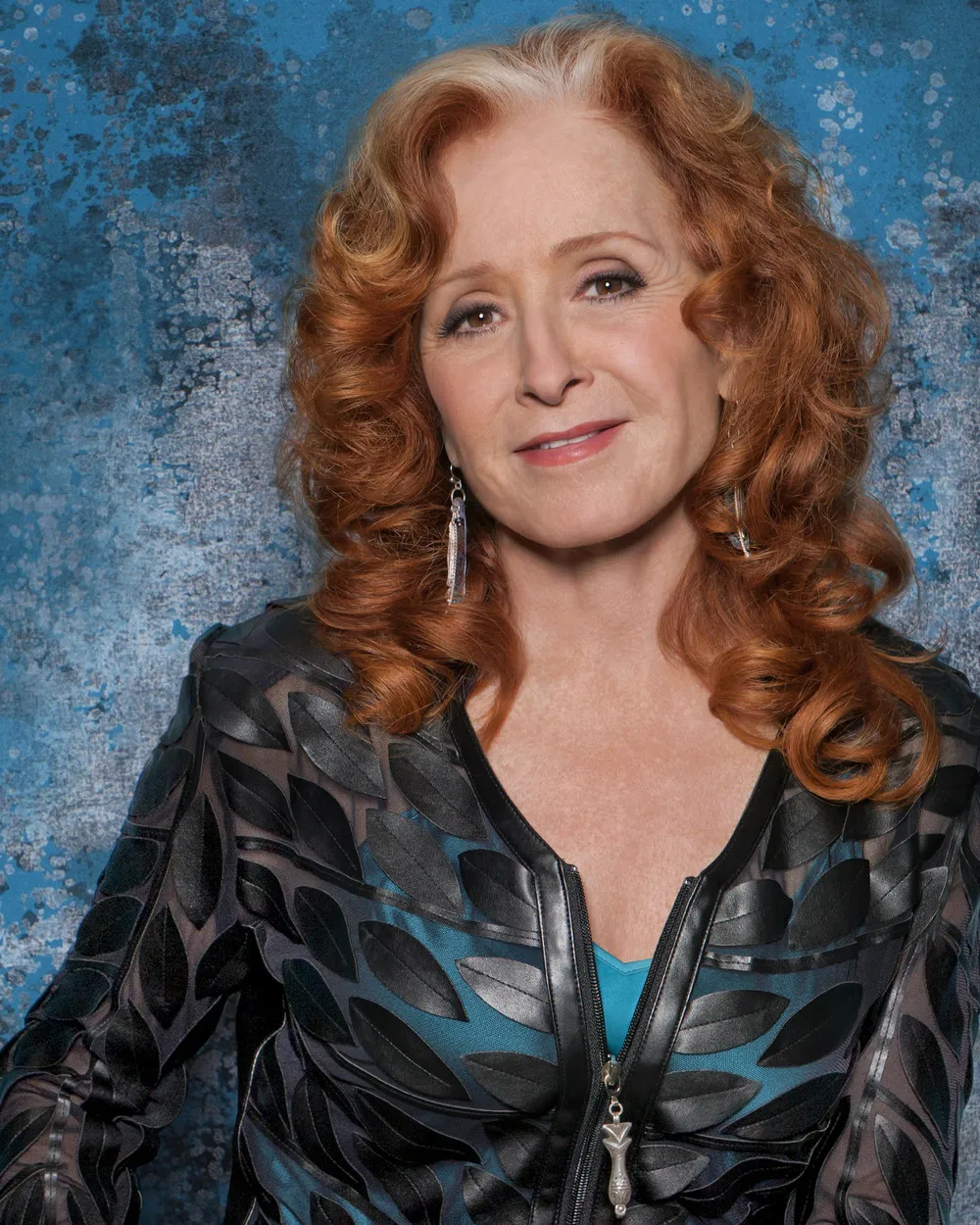
Bonnie Raitt, (born November 8, 1949) is an American blues and R and B singer, songwriter, and guitarist who was born in Burbank, California, the daughter of Broadway musical star John Raitt.
Raitt began playing guitar at an early age, something not a lot of her high school girlfriends did. "I had played a little at school and at camp," she later recalled in a July 2002 interview. "My parents would drag me out to perform for my family, like all parents do, but it was a hobby—nothing more...I think people must wonder how a white girl like me became a blues guitarist. The truth is, I never intended to do this for a living. I grew up...in a Quaker family, and for me being Quaker was a political calling rather than a religious one."
Read full biography ↓
In 1967 Raitt continued her pursuit in that path when she entered Harvards Radcliffe College as a freshman, majoring in African Studies. "My plan was to travel to Tanzania, where President Julius Nyerere was creating a government based on democracy and socialism," Raitt recalled. "I wanted to help undo the damage that Western colonialism had done to native cultures around the world. Cambridge was a hotbed of this kind of thinking, and I was thrilled."
One day, Raitt was notified by a friend that blues promoter Dick Waterman was giving an interview at WHRB, Harvards college radio station. An important figure in the blues revival of the 1960s, Waterman was also a resident of Cambridge. Raitt went to see Waterman, and the two soon became friends, "much to the chagrin of my parents, who didnt expect their freshman daughter to be running around with 65-year-old bluesmen," recalled Raitt. "I was amazed by his passion for the music and the integrity with which he managed the musicians."
During Raitts sophomore year, Waterman relocated to Philadelphia, and a number of local musicians he counted among his friends went with him. Raitt had become a strong part of that community, recalling that "these people had become my friends, my mentors, and though I had every intention of graduating, I decided to take the semester off and move to Philadelphia...It was an opportunity that young white girls just dont get, and as it turns out, an opportunity that changed everything."
Raitt eventually went back to school, but her time performing in Philadelphia had encouraged her to pursue music as a career. When Waterman contacted her and invited her to tour with The Rolling Stones, she made a second trip to the admissions office at Radcliffe and told them, "Im going to take a leave of absence, but this is only going to last a year." As Raitt would later recall, "Imagine being 20 in 1970—wouldnt you have gone on tour with the Rolling Stones?"
By now, Raitt was also playing both folk as well as rhythm and blues clubs in the Boston area, performing alongside established blues legends like Howlin Wolf, Sippie Wallace, and Mississippi Fred McDowell, all of whom she met through Waterman. In the fall of 1970, while opening for Fred McDowell at the Gaslight Cafe in New York, a reporter from Newsweek Magazine saw her and began to spread word of her performance. Scouts from major record companies were soon attending her shows to watch her play. She eventually accepted an offer with Warner Bros. who soon released her eponymously titled debut in 1971. The album was warmly received by the music press, many of which praised her skills as an interpreter and as a bottleneck guitarist; at the time, very few women in popular music had strong reputations as guitarists.
While admired by those who saw her perform, and respected by her peers, Raitt gained little public acclaim for her work. Her critical stature continued to grow but record sales remained modest. Her second album, Give It Up, was released in 1972 to universal acclaim, and though many critics still regard it as her best work, it did not change her commercial fortunes. 1973s Takin My Time was also met with critical acclaim, but these notices were not matched by the sales.
Raitt was beginning to receive greater press coverage, including a 1975 cover story for Rolling Stone Magazine, but with 1974s Streetlights, reviews for her work were becoming increasingly mixed. By now, Raitt was already experimenting with different producers and different styles, and she began to adopt a more mainstream sound that continued through 1975s Home Plate.
In 1976, Raitt made a notable appearance on Warren Zevons self-titled album with Warren Zevons friend Jackson Browne and Fleetwood Macs Lindsey Buckingham and Stevie Nicks.
1977s Sweet Forgiveness gave Raitt her first commercial breakthrough when it yielded a hit single in her cover of Del Shannons "Runaway." Recast as a heavy r and b recording based on a rhythmic groove inspired by Al Green, Raitts version of "Runaway" was disparaged by many critics, but its commercial success prompted a bidding war between Warner Bros. and Columbia Records. "There was this big Columbia – Warner war going on at the time," recalled Raitt in a 1990 interview. "James Taylor had just left Warner Bros. and made a big album for Columbia...And then, Warners signed Paul Simon away from Columbia, and they didnt want me to have a hit record for Columbia — no matter what! So, I renegotiated my contract, and they basically matched Columbias offer. Frankly the deal was a really big deal."
Warner Bros. held higher expectations for Raitts next album, 1979s The Glow, but it was released to poor reviews as well as modest sales. Raitt would have one commercial success in 1979 when she helped organize the five MUSE (Musicians United for Safe Energy) concerts at Madison Square Garden. The shows spawned a three-record gold album as well as a Warner Bros. feature film, No Nukes. The shows featured co-founders Jackson Browne, Graham Nash, John Hall, and Raitt as well as Bruce Springsteen, Tom Petty and the Heartbreakers, The Doobie Brothers, James Taylor, Gil Scott-Heron, and numerous others.
For her next record, 1982s Green Light, Raitt made a conscious attempt to revisit the sound of her earlier records, but to her surprise, many of her peers and members of the press would compare her new sound to the burgeoning New Wave movement. The album received her strongest reviews in years, but her sales did not improve and this would have a severe impact on her relationship with Warner Bros.
In 1983, as Raitt was finishing work on her follow-up album, titled Tongue and Groove, Warner Bros. cleaned house, dropping a number of major artists from their roster. Van Morrison and Arlo Guthrie were two of the most high-profile cases, and the day after mastering was completed on Tongue and Groove, Raitt was notified that she was to be dropped too. The album was shelved indefinitely, and Raitt was left without a label. By now, Raitt was also struggling with alcohol and drug abuse.
Despite her personal and professional problems, Raitt continued to tour and participate in political activism. In 1985, she sang and appeared in the video of "Sun City," the anti-apartheid record written a produced by Steven Van Zandt. Along with her participation in Farm Aid and Amnesty International concerts, Raitt would later travel to Moscow in 1987 as part of the first joint Soviet/American Peace Concert later shown on Showtime television. Also in 1987, Raitt would organize a benefit in Los Angeles, for Countdown 87 to Stop Contra Aid, featuring herself, Don Henley, Herbie Hancock, Holly Near and others.
Two years after dropping her from their label, Warner Bros. notified Raitt of their plans to release Tongue and Groove. "I said it wasnt really fair," recalled Raitt. "I think at this point they felt kind of bad. I mean, I was out there touring on my savings to keep my name up, and my ablility to draw was less and less. So they agreed to let me go in and recut half of it, and thats when it came out as Nine Lives." A critical and commercial disappointment, 1986s Nine Lives would be Raitts last new recording for Warner Bros.
In late 1987 she joined k.d. lang and Jennifer Warnes as female background vocals for Roy Orbisons television special, Roy Orbison and Friends, A Black and White Night. By now, Raitt was clean and sober, having broken her substance abuse — for which she would credit Stevie Ray Vaughan in a Minnesota State Fair concert[1] the night after Vaughans 1990 death. Following this highly acclaimed broadcast, she began working on new material. During this time, Raitt considered signing with Princes own label, Paisley Park, but negotiations would ultimately fall through. Instead she began recording a bluesy mix of pop and rock under the production guidance of Don Was at Capitol Records.
Raitt had met Was through Hal Wilner, who was putting together Stay Awake, a tribute album to Disney music for A and M. Was and Wilner both wanted Raitt to sing lead on an adult-contemporary arrangement created by Was for "Baby Mine," the lullaby from Dumbo. Raitt was very pleased with the sessions, and she asked Don to produce her next album.
After more than twenty years of singing and recording popular music, Bonnie Raitt achieved immense success with her 10th album. Released in 1989, Nick of Time went to the top of the U.S. charts and won three Grammy Awards. At the same time, she walked away with a fourth Grammy Award for her duet "In the Mood" with John Lee Hooker on his album "The Healer".
She followed up this success with three more Grammy Awards for her 1991 album, Luck of the Draw, then, in 1994 she added two more Grammys with her album Longing in Their Hearts. Both of these albums were multiplatinum successes. Raitts collaboration with Was would amicably come to an end with 1995s live release, Road Tested. Released to solid reviews, it sold well enough to be certified gold.
For her next studio album, Raitt hired Mitchell Froom and Tchad Blake as her producers. "I loved working with Don Was but I wanted to give myself and my fans a stretch and do something different," Raitt said. Her work with Froom and Blake was released on Fundamental in 1998.
In March of 2000, Raitt was inducted into the Rock and Roll Hall of Fame.
Silver Lining was released in 2002 while Souls Alike was released in September of 2005. Read more on Last.fm. User-contributed text is available under the Creative Commons By-SA License; additional terms may apply.
Biography text from Last.fm, available under CC BY-SA.