
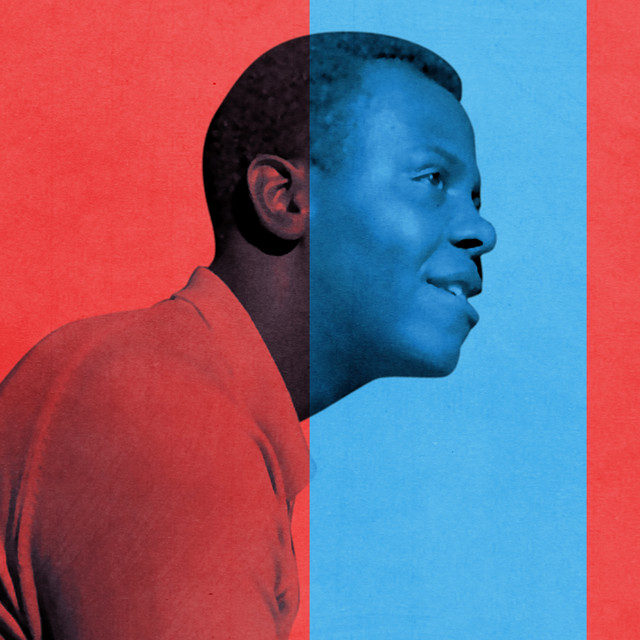
Larry Young
Biography
Larry Young (1940-1978) was an American jazz organist and occasional pianist. Young pioneered a modal approach to the Hammond B-3 (in contrast to Jimmy Smiths soul jazz style). However, he did play soul jazz also, among other styles. His characteristic sound involved management of the stops on the Hammond organ, producing overtone series that caused an ethereal, drifting effect; a sound that is simultaneously lead and background.
Young was born on the 7th October 1940 in Newark, New Jersey. He played with various R and B bands in the 1950s before gaining jazz experience with Jimmy Forrest, Lou Donaldson, Kenny Dorham, Hank Mobley, and Tommy Turrentine. Recording as a leader for Prestige from 1960, Young made a number of soul jazz discs including Testifying, Young Blues, and Groove Street. When Young went to Blue Note in 1964, his music began to show the marked influence of John Coltrane. He recorded many times as part of a trio with guitarist Grant Green and drummer Elvin Jones, occasionally augmented by additional players; most of this sequence of albums was released under Greens name, though Into Somethin (with Sam Rivers on saxophone) became Youngs Blue Note debut. Unity, recorded in 1965, remains his best-known album; it features a front line of Joe Henderson and the young Woody Shaw. Subsequent albums for Blue Note (Contrasts, Of Love and Peace, Heaven on Earth) also drew on elements of the 1960s avant-garde and utilised local musicians from Youngs home town of Newark. Young then became a part of some of the earliest fusion experiments: he played on Miles Davis Bitches Brew, then - with guitarist John McLaughlin - he joined Tony Williams Lifetime trio. His sound with Lifetime was made distinctive by his often very percussive approach and often heavy use of guitar and synthesiser-like effects. He is also known to rock fans for a jam he recorded with Jimi Hendrix, which was released after Hendrixs death on the album Nine to the Universe
Read full biography ↓
His characteristic sound involved management of the stops on the Hammond organ, producing overtone series that caused an ethereal, drifting effect; a sound that is simultaneously lead and background.
Young died from untreated pneumonia on the 30th March 1978 in New York City, at the age of thirty-eight.
If Jimmy Smith was "the Charlie Parker of the organ," Larry Young was its John Coltrane. One of the great innovators of the mid- to late 60s, Young fashioned a distinctive modal approach to the Hammond B-3 at a time when Smiths earthy, blues-drenched soul-jazz style was the instruments dominant voice. Initially, Young was very much a Smith admirer himself. After playing with various R and B bands in the 1950s and being featured as a sideman with tenor saxman Jimmy Forrest in 1960, Young debuted as a leader that year with Testifying, which, like his subsequent soul-jazz efforts for Prestige, Young Blues (1960), and Groove Street, (1962), left no doubt that Smith was his primary inspiration. But when Young went to Blue Note in 1964, he was well on his way to becoming a major innovator. Coltranes post-bop influence asserted itself more and more in Youngs playing and composing, and his work grew much more cerebral and exploratory. Unity, recorded in 1965, remains his best-known album. Quick to embrace fusion, Young played with Miles Davis in 1969, John McLaughlin in 1970, and Tony Williams groundbreaking Lifetime in the early 70s. Unfortunately, his work turned uneven and erratic as the 70s progressed. Young was only 38 when, in 1978, he checked into the hospital suffering from stomach pains, and died from untreated pneumonia. The Hammond heros work for Blue Note (as both a leader and a sideman) was united for Mosaics limited-edition six-CD box set The Complete Blue Note Recordings. ~ Alex Henderson, Rovi
Read more on Last.fm. User-contributed text is available under the Creative Commons By-SA License; additional terms may apply.
Biography text from Last.fm, available under CC BY-SA.