The Doobie Brothers
Biography
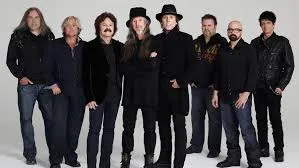
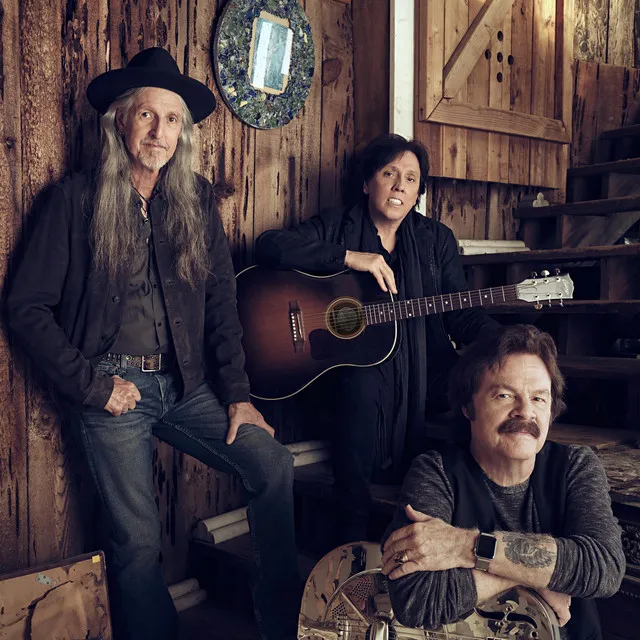
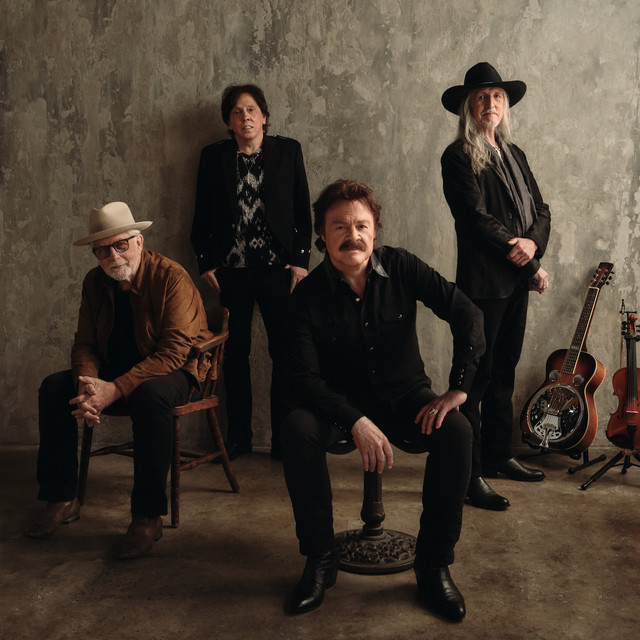
The Doobie Brothers is an American rock group formed in San Jose, California in 1970, best known for hit singles like Black Water, China Grove, Listen to the Music, Long Train Runnin, and What a Fool Believes. They have sold over 40 million albums worldwide. The Doobie Brothers were inducted into The Rock and Roll Hall of Fame in 2020.
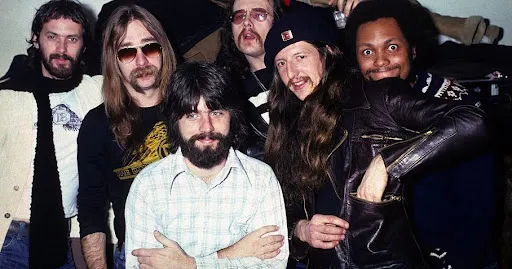
In 1969, singer, guitarist and songwriter Tom Johnston and drummer John Hartman formed the nucleus of what would become The Doobie Brothers. Skip Spence of Moby Grape (and formerly of Jefferson Airplane) introduced them to one another after Hartman arrived in California determined to meet Spence and join an aborted Grape reunion. New bandmates Johnston and Hartman called their fledgling group Pud and experimented with different lineups (occasionally in the lineups was Spence) and styles as they performed in and around San Jose. They were mostly a power trio (along with bassist Greg Murphy) but briefly worked with a horn section. In 1970, they teamed up with bass player Dave Shogren and singer, guitarist and songwriter Patrick Simmons. Simmons, who had belonged to several area groups (among them was the band "Scratch", which was an acoustic trio with future Doobies bassist Tiran Porter) and also performed as a solo artist, was already an accomplished fingerstyle player whose approach to the instrument complemented Johnstons rhythmic R and B strumming. In a recent interview, Tom Johnston attributed the bands eventual name to friend and housemate Keith "Dyno" Rosen, who noted the guys fondness for "doobies." They considered the new moniker an improvement over Pud.
Read full biography ↓
The Doobie Brothers honed their chops by performing live all over Northern California in 1970. They attracted a particularly strong following among local chapters of the Hells Angels and scored a recurring gig at one of the bikers favorite venues, the rustic Chateau Liberte in the Santa Cruz Mountains. An energetic set of demos (eight of which were briefly and illegally released on Pickwick Records in 1980 under the title Introducing the Doobie Brothers, and have since been bootlegged on CD under that title and On Our Way Up as well, both with expanded song selections), showcased fuzz-toned dual lead electric guitars, three-part harmonies and Hartmans frenetic drumming and earned the rock group a contract at Warner Bros. Records.
At this point in their history, the bands image reflected that of their biggest fans - leather jackets and motorcycles. However, the groups 1971 self-titled debut album departed significantly from that image and their live sound of the period. The album, which failed to chart, emphasized acoustic guitars and frequently reflected country influences. The bouncy lead-off song "Nobody," the bands first single, has surfaced in their live set several times over the ensuing decades.
The following years second album, Toulouse Street (which spawned the hits, and classic rock staples, "Listen to the Music" and Jesus Is Just Alright), brought the band their breakthrough success. In collaboration with manager Bruce Cohn, producer Ted Templeman and engineer Donn Landee, the band put forward a more polished and eclectic set of songs. They also made a change to the line-up, supplementing Hartmans drumming with that of Navy veteran Michael Hossack while still touring behind their first album, (A concert from June 14, 1971 at the Fillmore West bears this out as it has this short-lived lineup). Also, the band recorded several songs on the second album with Shogren on bass, guitar and background vocals. But during the albums recording, Shogren left after disagreements with producer Templeman. Shogren was replaced with singer, songwriter and bass guitarist Tiran Porter. Porter and Hossack were both stalwarts of the northern California music scene, Porter having previously played in Scratch with Simmons. Porter brought a funkier bass style to the band and added his husky baritone to the voices of Johnston and Simmons, resulting in a rich three part harmonic vocal blend. Pianist Bill Payne of Little Feat contributed keyboards for the first time, beginning a decades-long collaboration that included many recording sessions and even a two-week stint with the touring band in 1974. With an improved rhythm section and the songwriting of Johnston and Simmons, the Doobies trademark sound - an amalgam of R and B, country, bluegrass, hard rock, roadhouse boogie, and rock and roll - emerged fully formed.
A string of hits followed, including Johnstons "Long Train Runnin" and "China Grove," from the 1973 album The Captain and Me. Other noteworthy songs on the album were Simmons country-ish ode South City Midnight Lady and the explosive, hard rocking raveup, Without You, for which the entire band received songwriting credit. Onstage, the latter song would sometimes stretch into a 15-minute jam with additional lyrics ad-libbed by Johnston. A 1973 appearance on the debut episode of Don Kirshners Rock Concert featured one such epic performance of the tune.
In the midst of recording sessions for their next album, 1974s What Were Once Vices Are Now Habits, Hossack abruptly departed the band citing burnout from constant touring. Drummer, songwriter and vocalist Keith Knudsen (who previously drummed for Lee Michaels of Do You Know What I Mean fame) was recruited promptly and left with the Doobies on a major tour within days of joining in September of 1973. (Hossack subsequently replaced Knudsen in the band Bonaroo, which served as an opening act for the Doobies shortly thereafter.) Both Hossacks drums and Knudsens voice are heard on Vices.
In 1974, Steely Dan co-lead guitarist Jeff "Skunk" Baxter learned that his band was retiring from the road and that Donald Fagen and Walter Becker intended to work almost exclusively with session players in the future. In need of a steady gig, he segued into the Doobie Brothers as third lead guitarist in the middle of their current tour. He had previously worked with the band in the studio, adding pedal steel guitar to both Captain ("South City Midnight Lady") and Vices ("Black Water," "Tell Me What You Want") and had already been playing with the band as a "special guest" during that years tour.
Vices included the bands first #1 single: Simmons signature tune "Black Water," which featured the memorable refrain, "Id like to hear some funky Dixieland, pretty mama come and take me by the hand"; climbed to the top of the charts in March 1975; and eventually propelled the album to multi-platinum status. Johnstons lyrical Another Park, Another Sunday (as a single, it featured "Black Water" as the B-side) and his horn-driven funk song "Eyes of Silver" had also charted at #32 and #52, respectively, the previous year.
During this period and for several subsequent tours, the Doobies were often supported on-stage by Stax Records legends The Memphis Horns. Live recordings with the horn section have aired on radio on the King Biscuit Flower Hour, though none has been officially released. They also appeared as session players on multiple Doobies albums.
By the end of 1974, Johnstons health was suffering from the rigors of the road. He was absent when the band joined The Beach Boys, Chicago and Olivia Newton-John on "Dick Clarks Rockin New Years Eve" that December. By then, the western-themed Stampede had been completed for release in 1975. It featured yet another hit single, Johnstons cover of the Holland-Dozier-Holland-written Motown hit Take Me in Your Arms (originally sung by Kim Weston and also covered by Blood, Sweat and Tears). The song included a distinctive Baxter guitar solo. Simmons contributed the atmospheric "I Cheat the Hangman," as well as Neals Fandango, an ode to Santa Cruz, Jack Kerouac and Neal Cassady. Ry Cooder added his slinky slide guitar to Johnstons cowboy song, "Rainy Day Crossroad Blues".
By the start of the Spring 1975 promotional tour for Stampede, Johnstons condition was so precarious that he required emergency hospitalization for a bleeding ulcer. With Johnston convalescing and the tour already underway, Baxter proposed recruiting a fellow Steely Dan alum to fill the hole: singer, songwriter and keyboardist Michael McDonald. Simmons, Knudsen, Porter and McDonald divvied up and sang Johnstons parts on tour while Simmons and Baxter shared lead guitar chores.
Under contract to release another album in 1976, the Doobies were at a crossroads. Their primary songwriter and singer remained unavailable, so they turned to McDonald and Porter for material to supplement that of Simmons. The resulting LP, Takin It to the Streets, debuted a radical change in their sound. Electric guitar-based rock and roll gave way to blue-eyed soul and soft rock emphasizing keyboards and horns. Baxter contributed jazz-inflected guitar stylings reminiscent of Steely Dan, along with more emphasis on minor chords throughout many of the songs inner melodies. Above all, McDonalds voice became the bands new signature sound. Takin It to the Streets featured McDonalds title track and It Keeps You Runnin, both hits. ("It Keeps You Runnin" would be covered by Carly Simon appearing on her album Another Passenger, with the Doobies backing her). Bassist Porter wrote and sang a tribute to the absent Johnston, entitled "For Someone Special." A greatest hits compilation, Best of the Doobies, followed before years end. (In 1996, the Recording Industry Association of America certified Best of the Doobies "Diamond" for sales in excess of ten million.)
Their new sound was further refined and McDonalds dominant role cemented with 1977s Livin on the Fault Line. It featured a cover of the Motown classic "Little Darlin (I Need You)," "Echoes Of Love" (written for, but not recorded by Al Green, by James Mitchell, then of the Memphis Horns, and Earl Randle, both of whom had worked with Green a good bit, to which Simmons added some music and lyrics, co-writing the finished version with Mitchell and Randle, the song was later covered by the Pointer Sisters), and "You Belong To Me" (co-written by McDonald and Carly Simon, who had a hit with her own version of the tune). To help promote Fault Line, the band performed live on the PBS show Soundstage and appeared as themselves in a two-part episode of the television comedy Whats Happening!!. This album is a shimmering, nearly seamless masterpiece, perhaps the most musically sophisticated and richest in the Doobies history. Jeff Baxter used an early type of guitar synthesizer (made by Roland) on many of the tracks (it is heavily featured in his solo on the title track, as well as on "Chinatown"). There are also wonderful overall band and vocal arrangements and some absolutely superb horn and string arrangements by David Paich that augment the bands great playing. In addition, it featured even more use of minor chords, as often used in jazz. Unlike many pop/rock groups that utilize minor chords for their dark and foreboding feel, the Doobies managed to temper that with strong pop hooks, resulting in an album that, though not really jazz, had much of the feel of the "cool jazz" era in a pop setting.
Both Streets and Fault Line reflected Tom Johnstons diminished role in the group following his illness. Restored to fitness and briefly back in the fold, he contributed one original song to Streets, ("Turn It Loose"), and also added a vocal cameo to Simmons tune "Wheels of Fortune." He also made live appearances with the band in 1976 (documented in a concert filmed that year at the Winterland in San Francisco, excerpts from which appear occasionally on VH1 Classic), but was sidelined once again in the fall due to exhaustion. None of Johnstons songs appeared on Fault Line, though he had written and the band had recorded five of his compositions for the album. Finally, before Fault Line was released, Johnston had his songs removed and he left the band that he co-founded (though he received credit for guitars and vocals and was pictured on the albums inner sleeve band photo). He embarked on a solo career that eventually yielded one modestly successful Warner Brothers album Everything Youve Heard is True (1979) and the less successful Still Feels Good (1981).
During the period of transition, the band also elevated former roadie Bobby LaKind to onstage vocalist and percussionist. In the studio, LaKind first contributed percussion to Streets. He had joined the road crew in 1974.
After almost a decade on the road, and with seven albums under their belts, the Doobies career unexpectedly soared with the success of their next album, 1978s Minute by Minute. It spent five weeks at the top of the music charts and dominated several radio formats for the better part of two years. McDonalds song What a Fool Believes, written with Kenny Loggins, was the bands second #1 single and earned the songwriting duo a Grammy Award for Record of the Year. The breezy, McDonald-penned title song received the Grammy for Pop Vocal Performance by a Group and the album was honored with an Album of the Year nod. Among the other memorable songs on the album were "Here to Love You," Dependin On You (co-written by McDonald and Simmons), "Steamer Lane Breakdown" (a Simmons bluegrass instrumental) and McDonalds "How Do the Fools Survive?" (which featured a lengthy guitar coda improvised by Baxter in a single take, according to a 1980 interview in Guitar Player Magazine). Nicolette Larson (whose best-known hit was Lotta Love) and departed former bandleader Johnston contributed guest vocals on the album.
The triumph of Minute by Minute was bittersweet, however, because it coincided with the near-dissolution of the band. The pressure of touring while recording and releasing an album each year had worn the members down. Jeff Baxter and Michael McDonald had been in the midst of a creative conflict for some time. McDonald desired a simple, polished rock/R and B sound while Baxter insisted on embellishing guitar parts in an increasingly avant garde style. (Both McDonald and Baxter elaborated on the matter in the documentary series Behind the Music, which aired on VH1 in February 2001.) Just as Minute by Minutes monumental success had become apparent, founding drummer Hartman, longtime guitarist Baxter and LaKind exited through the revolving door. A two-song set on the January 27, 1979 broadcast of Saturday Night Live (with guest host Michael Palin ) marked the final television appearance of this lineup, and a brief tour of Japan marked the last live performances of the band in its middle-period configuration. (Hartman subsequently joined Johnstons touring band in 1979 and taped an appearance with Johnston that aired on Soundstage in 1980.)
With the surprise smash album embedded in the charts and more money to be earned on the road, the remaining Doobies (Simmons, Knudsen, McDonald and Porter) decided to forge ahead. In 1979, Hartman was replaced by ace session drummer Chet McCracken, and Baxter by multi-instrumental string player John McFee (late of Huey Lewis early band Clover); Cornelius Bumpus was also recruited to add vocals, keyboards and saxophone to the line-up. This line-up toured throughout 1979, including stops at Madison Square Garden and New York Citys Central Park for the No Nukes benefit shows with like-minded artists such as Bonnie Raitt, Crosby, Stills and Nash, James Taylor, Carly Simon, Jackson Browne, Bruce Springsteen and John Hall.
1980 marked the return of LaKind to the lineup as a full member and the Doobies released their ninth studio album, entitled One Step Closer. The LP featured the hit title track and the Top Ten smash "Real Love" (not to be confused with the John Lennon composition) but did not dominate the charts and the radio as Minute by Minute had two years earlier, largely due to an over saturation of the "McDonald sound" by many other artists (such as Robbie Duprees hit Steal Away, which copied the "McDonald sound" nearly note for note) heard on the radio at that time(Not to mention McDonalds numerous guest vocal appearances on hits by other artists at that time, such as Kenny Loggins, Christopher Cross, Nicolette Larson and others). The album itself was also musically far weaker than the previous three with the band itself sounding tired and seemingly little more than McDonalds "backup band" by then (according to contemporary references at that time). Long frustrated with the realities of relentless touring and yearning for a stable home life, as well as battling self-admitted problems with cocaine, Porter left the band after the recording of Closer. Renowned session bassist Willie Weeks joined up and the Doobies continued touring throughout 1980 and 1981. (Post-Doobies, Weeks has performed with the Gregg Allman Band, Eric Clapton and many others.) Also during this tour, session vet Andy Newmark stepped in briefly for Knudsen, who was in rehab then.
By the end of 1981, even Simmons had resigned from the band. Now faced with the prospect of calling themselves "The Doobie Brothers" with no remaining original members, a sound that was light years away from their original version and a "leader" in McDonald that was ready for a solo career, the group elected instead to disband, and even this wasnt decided upon until after a rehearsal done without Simmons, in a vain attempt to keep the band going, according to an interview with McDonald for "Listen To The Music," the Doobie Brothers official video history/documentary released in 1989. He went on to say in that interview that at that point they couldnt have gotten further away from the Doobies sound if they had tried to. The reluctant Simmons, already hard at work on his first solo album, rejoined for a 1982 farewell tour on the promise that this truly would be the end. At their last concert at the Greek Theater in Berkeley, they were joined onstage by founder Tom Johnston for what was presumed to be the final rendition of his staple, "China Grove." Former members Porter, Hossack and Hartman subsequently took the stage for an extended version of "Listen to the Music." Knudsen sang while Simmons, Johnston and McFee traded licks on guitar. Of all the members through the years, only Shogren was absent when the group took its "final" bow. The live album Farewell Tour followed in 1983.
On February 8, 2005, Keith Knudsen, whod been battling cancer for almost ten years, died of pneumonia at Kentfield Rehabilitation Hospital. Former Vertical Horizon drummer Ed Toth was selected to fill Knudsens drum seat as the band soldiered on.
Johnston was forced to miss several shows in the summer of 2007 following an operation for a throat ailment. Upon his return, he received vocal assistance from Simmons and McFee on certain tunes that he had traditionally sung in their entirety.
The Doobies provided the half-time entertainment for the FedEx Orange Bowl football game on January 1, 2009 in Miami, Florida.
For their 2010 summer tour they were (as previously in 1999 and 2008) once again paired with the band Chicago.
In May 2010, Skylark was forced to sit out due to a stroke. John Cowan returned to substitute in for Skylark. A few months later, Hossack was forced to sit out due to cancer. Tony Pia, a member of the Brian Setzers Orchestra, came in to substitute for Hossack. On March 12, 2012, Hossack died at his home in Dubois, Wyoming.
On July 6, 2010, The Doobie Brothers announced a new album entitled World Gone Crazy, produced with their long-time producer Ted Templeman, which was released on September 28, 2010. The first single from the album, entitled Nobody, can be listened to on their official website.[11] They have also announced plans to release a DVD compilation of live performances and television appearances from throughout the groups long career.
The group continues to tour heavily and remains a popular concert draw. From 2005 through 2007 they headlined benefit concerts at manager Cohns B.R. Cohn Winery in Glen Ellen (once again sharing the stage with "special guest" McDonald in 2006). They have maintained a continuous and active presence on the Internet through their official website since 1996.
As of March 2012, five members of The Doobie Brothers family are deceased: percussionist LaKind in 1992 following his lengthy struggle with terminal cancer; original bassist Shogren of unreported causes in 1999; Bumpus of a heart attack in 2004 while in the air en route to California for a solo tour; drummer and activist Keith Knudsen in 2005 of cancer and chronic pneumonia; and drummer Michael Hossack of cancer on March 12, 2012. Read more on Last.fm. User-contributed text is available under the Creative Commons By-SA License; additional terms may apply.
Biography text from Last.fm, available under CC BY-SA.